
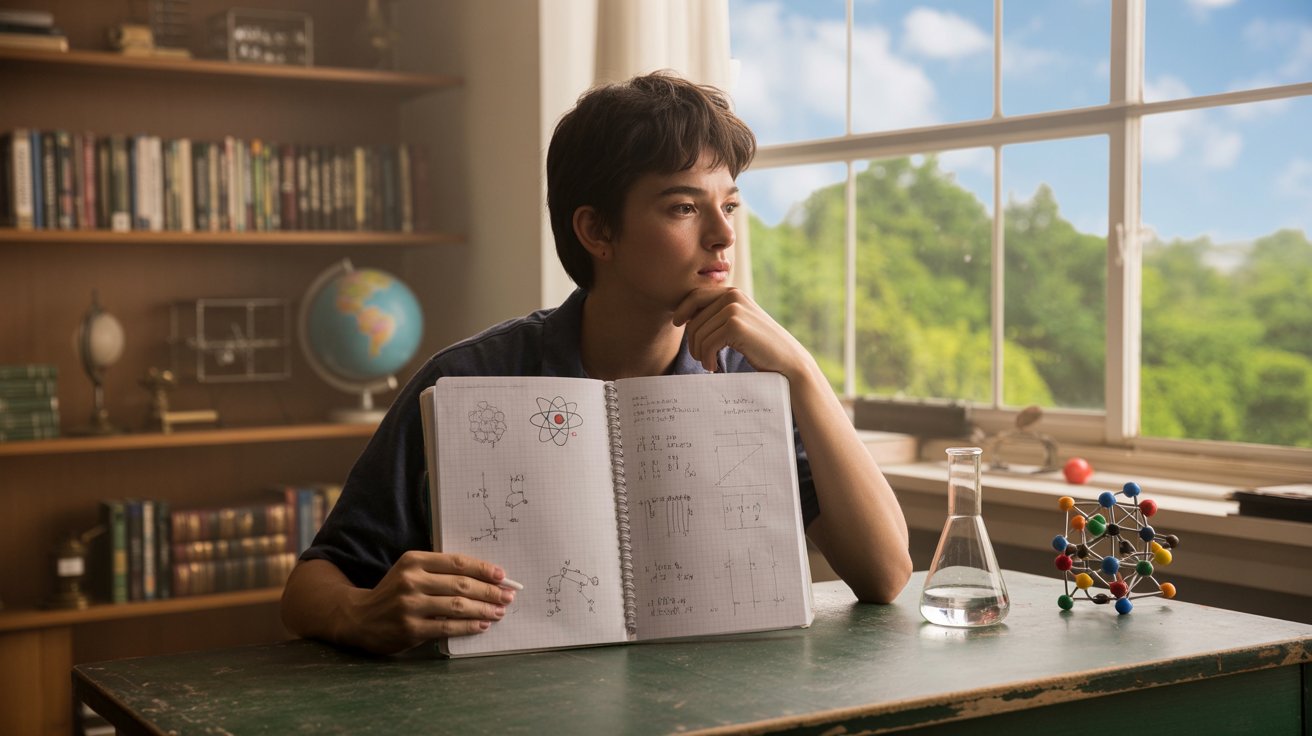
What Teaching at Summerhill Taught Me About How Students Actually Learn
Walk into most classrooms and you’ll notice something almost immediately… a kind of invisible contract.
Sit still. Pay attention. Follow along. Get it right.
It’s a system that has worked well enough for long enough that few people stop to question it. And yet, beneath the surface, there’s a quiet mismatch. Not every mind moves at the same pace. Not every student engages in the same way. Not every moment of distraction is a lack of effort… sometimes it’s a lack of connection.
At Summerhill School, things are different.
There’s no compulsion to attend lessons. No rigid enforcement of structure. On paper, it can look chaotic. Even risky. But spend enough time there, and something else begins to reveal itself… a deeper pattern of how learning actually happens when it isn’t forced.
Because when students choose to engage, the quality of that engagement changes completely.
The Myth of Constant Focus
One of the biggest misunderstandings in education is the idea that focus should be continuous.
It sounds reasonable… until you sit with a student who is trying, genuinely trying, and simply cannot hold that line of attention in the way the system demands.
For students with ADHD, this becomes even more pronounced. Focus isn’t absent… it’s variable. It arrives in bursts, often tied to interest, curiosity, or emotional connection rather than obligation.
At Summerhill, that variability isn’t treated as a flaw. It’s part of the rhythm.
A student might disengage… wander… return later… and when they do, they often come back sharper, more receptive, and more willing to wrestle with the material.
That’s not failure. That’s timing.
Autonomy Changes Everything
There’s a subtle shift that happens when a student feels they have agency.
Instead of learning being something done to them, it becomes something they participate in.
And participation creates ownership.
Ownership creates investment.
Investment… creates progress.
This is particularly important for students who have struggled in traditional environments. Those who have been labelled as “behind” or “difficult” often carry that identity with them. It becomes part of how they see themselves.
But remove the pressure… allow space… and something unexpected happens.
They begin to re-engage on their own terms.
Science, Stripped Back
Science itself doesn’t need to be complicated to be meaningful.
At its core, it’s curiosity formalised. Why does this happen? What changes if we adjust that? What patterns can we see?
The problem is that somewhere along the way, science education became heavily tied to performance. To exams. To memorisation. To getting the “right” answer quickly.
But understanding doesn’t work like that.
Real comprehension is slower. Messier. It involves wrong turns, partial insights, and moments where things don’t quite click… until they do.
The role of a good tutor isn’t to accelerate that process artificially… it’s to guide it without breaking it.
What This Means for Tutoring
Bringing this approach into one-to-one tutoring changes the dynamic entirely.
It becomes less about pushing through a syllabus and more about reading the student in front of you.
Some need structure.
Some need reassurance.
Some need space to think out loud without fear of being wrong.
And many simply need someone to meet them where they are… not where the system expects them to be.
For students who are home educated, neurodivergent, or simply disengaged from traditional schooling, this kind of approach can be the difference between enduring education… and actually benefiting from it.
A Different Kind of Progress
Progress doesn’t always look like higher test scores overnight.
Sometimes it looks like a student asking a question they wouldn’t have asked before.
Sometimes it’s the moment they explain something back in their own words.
Sometimes it’s quieter still… a shift in confidence, a sense that maybe they can understand this after all.
Those are the signals that matter.
Because once that foundation is there, the results tend to follow anyway.
Closing Thought
Education doesn’t need to be louder, faster, or more pressured to be effective.
In many cases, it needs the opposite.
More patience.
More awareness.
More room for the human side of learning to unfold.
And when that happens… science stops being something to get through, and starts becoming something to explore.
Book a Free Introductory Session
A relaxed, no-pressure session to see if this approach works for your child.
Leave a Reply